
Practical Money Saving Strategies for Families
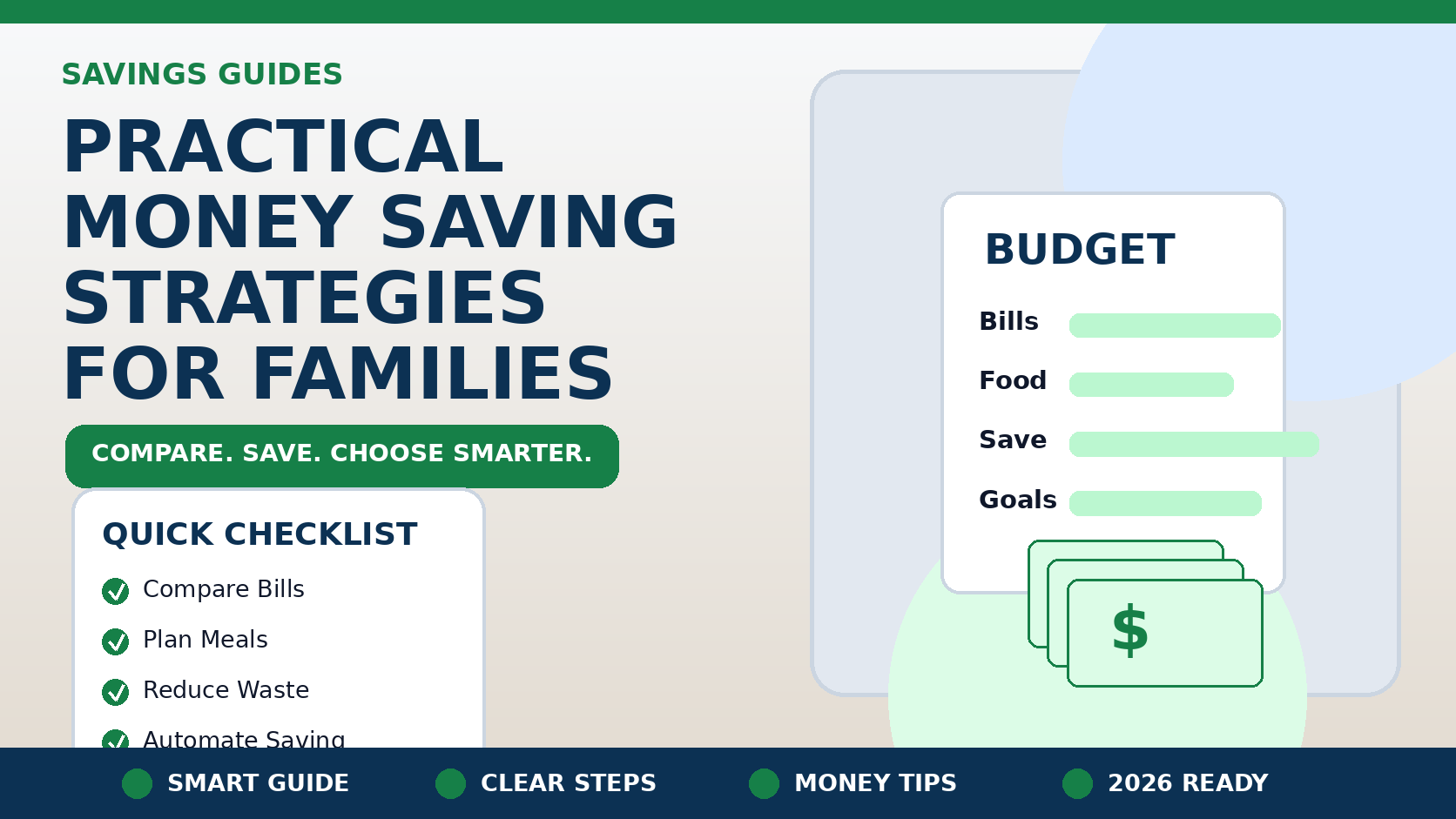
Saving money as a family often comes from many small decisions rather than one dramatic change. The best strategies are practical, repeatable, and realistic for your household routine.
Families can make progress by reducing waste, comparing recurring bills, planning purchases, and building systems that make good decisions easier.
This guide shares simple strategies that can help families improve monthly cash flow.
Compare Recurring Bills
Recurring bills are a strong starting point because savings repeat every month. Review insurance, phone plans, internet, subscriptions, memberships, and service contracts at least once a year.
A quick comparison can reveal outdated plans or unused features.
- Insurance policies
- Phone and internet plans
- Streaming subscriptions
- Home services
- Bank fees or account charges
Use Grocery Systems
A grocery system can reduce overspending and food waste. Plan meals around what you already have, build a list, compare unit prices, and avoid shopping when rushed or hungry.
Families can also use leftovers intentionally to reduce takeout spending.
- Meal plan before shopping
- Use pantry inventory
- Compare unit prices
- Buy bulk only for items you use
- Plan leftovers
Control Transportation Costs
Transportation costs include fuel, maintenance, insurance, parking, repairs, and loan payments. Keeping vehicles maintained and comparing insurance can help reduce long-term costs.
Families with multiple vehicles should review usage and coverage needs carefully.
- Routine maintenance
- Fuel-efficient driving habits
- Insurance review
- Carpooling when practical
- Avoiding unnecessary trips
Make Saving Automatic
Automatic savings can help families pay themselves first. Even a small recurring transfer can build an emergency fund over time.
Separate accounts for different goals can make savings easier to track.
- Emergency savings
- Home repair fund
- Vehicle repair fund
- Holiday fund
- Medical expense fund
Reduce Waste Before Reducing Quality
The goal is not to cut every enjoyable expense. Start by eliminating waste: unused subscriptions, duplicate services, late fees, impulse purchases, and food thrown away.
This approach protects quality of life while still improving finances.
- Cancel unused services
- Avoid late fees
- Use what you already own
- Repair before replacing when sensible
- Set spending limits for impulse categories
Final Thoughts
Practical saving is about habits. Compare recurring bills, plan groceries, automate savings, and reduce waste first. Small improvements can add up when they become part of the family routine.
Start With Recurring Expenses
Recurring bills are a good place to begin because small monthly changes can create long-term savings. Review insurance premiums, mobile plans, internet service, subscriptions, utilities, banking fees, and memberships at least a few times per year.
When comparing alternatives, look at the total cost and terms. A lower advertised price may include fees, a temporary promotion, weaker service, or a contract requirement.
Simple Savings Habits
- Track spending for 30 days before making cuts
- Cancel unused subscriptions
- Compare quotes before renewing major policies
- Plan grocery lists around actual meals
- Set aside a small amount for irregular expenses
The most useful savings plan is one you can repeat. Choose realistic steps that fit your household instead of trying to change everything at once.
Even a small confirmed saving can be useful when it is repeated every month and assigned to a clear purpose, such as emergency savings or a necessary upcoming expense.
Related Guides
- Smart Ways to Lower Household Expenses
- Budgeting Tips for Families in 2026
- Best Health Insurance Plans in 2026
- Best Auto Insurance Companies in 2026
This article is for educational purposes only. Coverage, pricing, plan availability, incentives, and program rules can vary by provider, location, and individual circumstances. Always review official documents before making financial or insurance decisions.
Example: A 30-Day Savings Reset
A simple reset can begin by tracking every purchase for 30 days. At the end of the month, group spending into needs, flexible wants, fees, subscriptions, and irregular expenses. This shows where money is going without guessing.
Next, pick two or three changes with the highest impact. For one household, that may be comparing insurance quotes. For another, it may be meal planning, reducing delivery costs, or changing an internet plan.
What to Avoid
- Cutting important coverage without understanding the risk
- Switching services based only on a short promotion
- Ignoring cancellation fees or contract terms
- Trying to change every spending habit at once
- Forgetting to track whether the change actually saved money
Real savings should be measurable, repeatable, and practical for your household.
Final Savings Tip
Choose one savings action at a time and measure the result. For example, compare insurance quotes this week, review subscriptions next week, and check utility usage after that. This approach is easier to follow than trying to fix every bill in one weekend.
Keep notes on what changed and how much was saved. Written results make it easier to stay motivated and repeat the process later.
After making a change, track the next bill or statement to confirm the savings actually happened. A planned saving is only useful when it appears in the household budget and can be redirected toward another goal.
Helpful official resources
Use these official or public-information resources to verify rules, coverage details, consumer protections, and eligibility before making a decision.